For many years, thighs were not considered a “problem area” in fashion. In fact, for centuries they were rarely visible under clothing, and style conversations focused more on waistlines, shoulders, or necklines.
So why do so many people today feel self-conscious about this part of the body?
The answer may have less to do with bodies themselves — and more to do with how fashion trends have changed over time.
A Shift in Silhouettes
In past decades, the “hourglass” shape was widely promoted as the ideal figure: a defined waist with balanced hips and shoulders. Clothing was often designed to highlight curves.
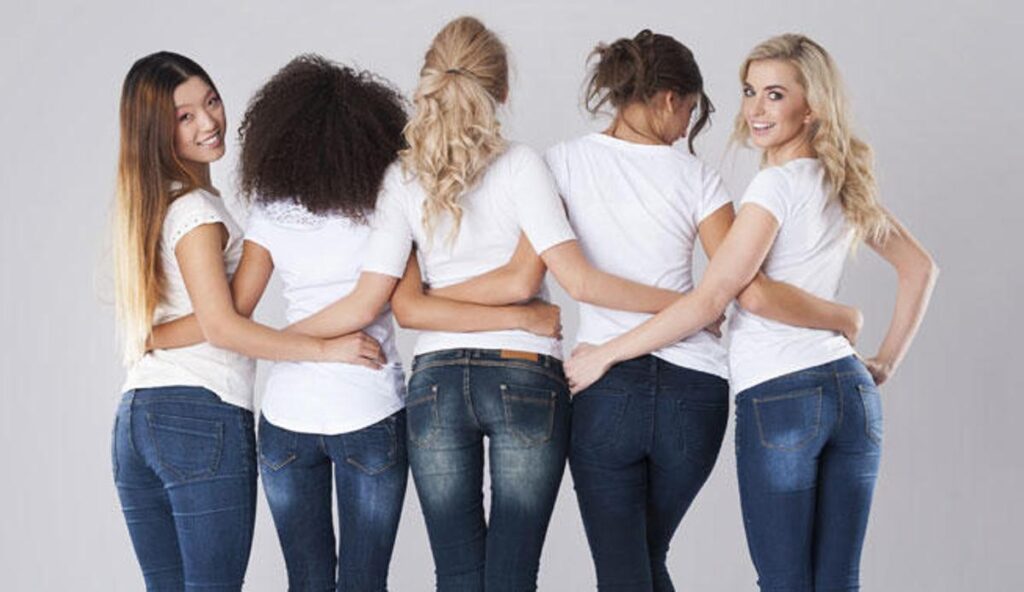
But over time, fashion moved toward cleaner, straighter silhouettes. Slim, rectangular shapes became common on runways and in lookbooks. As skinny jeans, leggings, pencil skirts, and body-con styles grew popular, the natural contours of the hips and thighs became more visible.
It wasn’t that bodies changed overnight — clothing did.
When styles emphasize straight lines, any natural curve can feel more noticeable. That visibility sometimes turns into unnecessary self-criticism.
Changing Beauty Narratives
Modern fashion also reflects broader cultural shifts. Today’s visual language often highlights minimalism, structure, and simplicity. In some settings, understated silhouettes are associated with confidence and modernity.
At the same time, traditional symbols of femininity — such as pronounced hips — are interpreted differently depending on context. Trends evolve, but bodies remain diverse.
Throughout history, beauty standards have shifted dramatically. From structured Victorian silhouettes to 20th-century hourglass glamour to today’s minimalist aesthetic, what is considered “ideal” has always been influenced by culture.
Beyond Fashion: The Emotional Side
What often goes unspoken is how these trends affect personal confidence.
Seeing ourselves in fitted clothing can sometimes trigger feelings of discomfort — not because there is something “wrong,” but because we compare ourselves to a narrow visual standard.
But fashion is cyclical. What is highlighted in one era may fade in another. And most importantly, clothing should adapt to the individual — not the other way around.
Rather than focusing on “hiding” certain areas, a more empowering approach may be learning how to choose cuts and fabrics that feel comfortable and authentic.
Bodies are not trends. They are personal and unique.
And style, at its best, is about expression — not correction.